Railway Group D vs NTPC Jobs 2026 – Eligibility, Salary, Selection Process & Career Growth
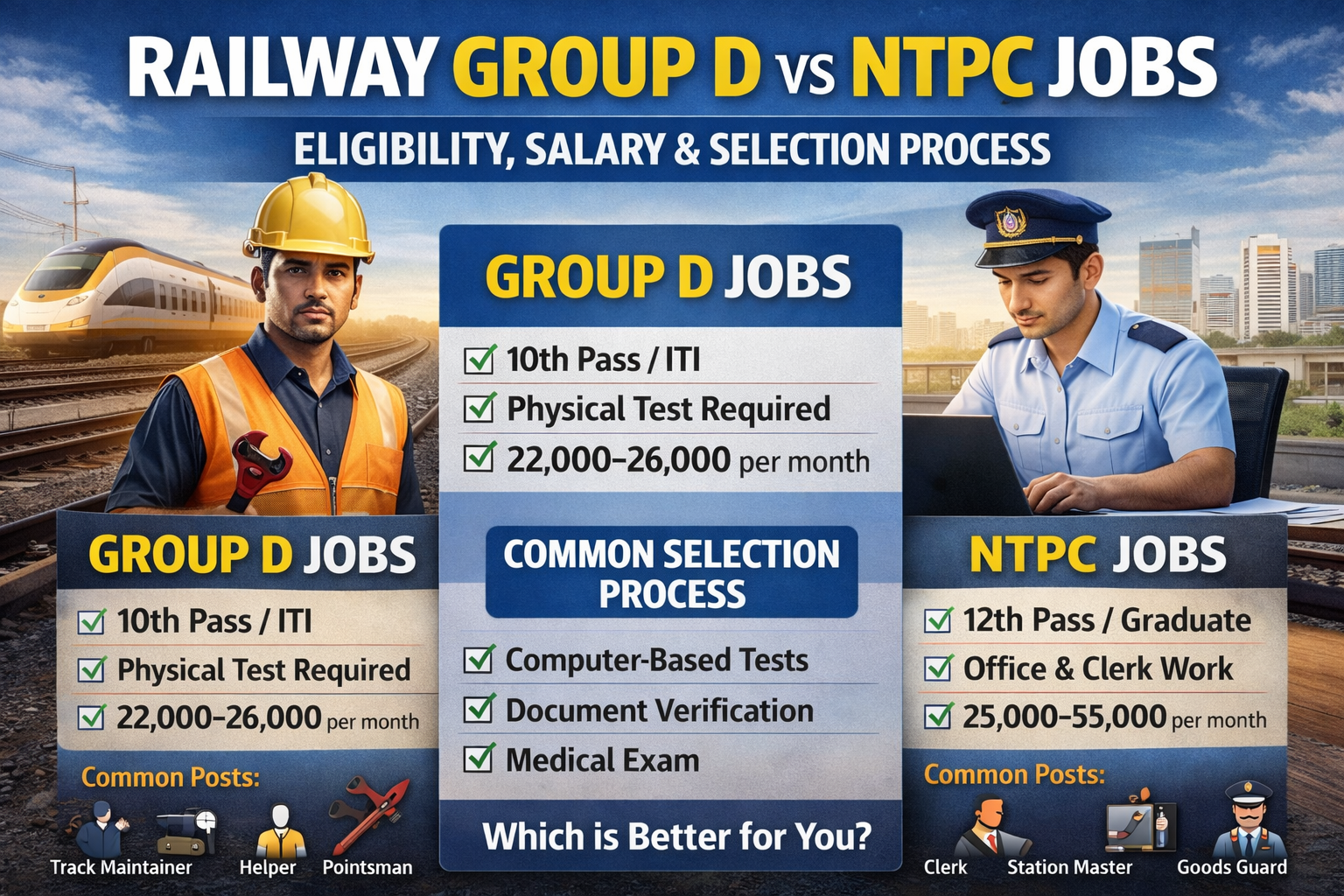
Every year, millions of candidates apply for railway recruitment, but one common confusion remains — which is better: Group D or NTPC? If you are planning a railway career in 2026, understanding the real difference between these two categories can save you time, effort, and preparation mistakes.
This complete guide on Railway Group D vs NTPC Jobs explains eligibility, salary structure, exam pattern, selection process, promotion scope, and career growth. By the end of this article, you will clearly know which post suits your qualification and long-term goals.
Table of Contents
- Overview of Railway Recruitment
- What is Railway Group D?
- What is Railway NTPC?
- Railway Group D vs NTPC Jobs – Key Differences
- Eligibility Criteria Comparison
- Salary Structure Comparison
- Selection Process Explained
- Exam Pattern Breakdown
- Promotion & Career Growth
- Which Job is Better for You?
- FAQs
- Final Conclusion
Overview of Railway Recruitment
Railway recruitment in India is conducted by the Railway Recruitment Board (RRB). Different categories of posts are announced under Group D and NTPC (Non-Technical Popular Categories).
Before choosing between Railway Group D vs NTPC Jobs, it is important to understand their job roles and responsibilities.
What is Railway Group D?
Railway Group D posts are entry-level technical and support roles in Indian Railways. These jobs mainly involve physical work and field duties.
Common Group D Posts
- Track Maintainer
- Helper
- Assistant Pointsman
- Hospital Attendant
Group D jobs are suitable for candidates who have completed 10th pass or ITI qualification.
What is Railway NTPC?
NTPC stands for Non-Technical Popular Categories. These are clerical and administrative positions in Indian Railways.
Common NTPC Posts
- Junior Clerk
- Accounts Clerk
- Goods Guard
- Station Master
- Commercial Apprentice
NTPC posts usually require 12th pass or graduation, depending on the position.
Railway Group D vs NTPC Jobs – Key Differences
| Feature | Group D | NTPC |
|---|---|---|
| Qualification | 10th / ITI | 12th / Graduate |
| Job Type | Technical / Field Work | Clerical / Administrative |
| Physical Test | Yes | No (Except specific posts) |
| Salary Level | Level 1 | Level 2–6 |
| Competition Level | High | Very High |
This comparison clearly highlights the structural difference in Railway Group D vs NTPC Jobs.
Eligibility Criteria Comparison
Group D Eligibility
- Minimum 10th pass or ITI from recognized board
- Age: 18–33 years
- Age relaxation as per government rules
NTPC Eligibility
- 12th pass for Clerk posts
- Graduation required for Station Master and Goods Guard
- Age: 18–32 years
If you are confused about qualification requirements, this Railway Group D vs NTPC Jobs eligibility breakdown makes the difference clear.
Salary Structure Comparison
Group D Salary
| Component | Amount (Approx) |
|---|---|
| Basic Pay | 18,000 |
| DA + HRA | 6,000 – 8,000 |
| Total | 22,000 – 26,000 |
NTPC Salary
| Post | Salary (Approx) |
|---|---|
| Clerk | 25,000 – 30,000 |
| Goods Guard | 35,000 – 40,000 |
| Station Master | 40,000 – 55,000 |
Clearly, NTPC offers higher salary levels compared to Group D posts. Salary is a major deciding factor in Railway Group D vs NTPC Jobs comparison.
Selection Process Explained
Group D Selection Process
- Computer Based Test (CBT)
- Physical Efficiency Test (PET)
- Document Verification
- Medical Examination
NTPC Selection Process
- CBT Stage 1
- CBT Stage 2
- Skill Test / Typing Test (For Clerk)
- Document Verification
- Medical Examination
The physical test requirement makes Railway Group D vs NTPC Jobs selection process quite different.
Exam Pattern Breakdown
Group D CBT Subjects
- Mathematics
- General Intelligence & Reasoning
- General Science
- General Awareness
NTPC CBT Subjects
- Mathematics
- General Intelligence & Reasoning
- General Awareness
NTPC exam is generally considered slightly tougher due to higher competition and two CBT stages.
Promotion & Career Growth
Group D Growth
Promotion through departmental exams to Technician or Clerk positions.
NTPC Growth
Higher promotion ladder including Senior Clerk, Chief Commercial Manager, and Divisional Officer roles.
Long-term career growth strongly favors NTPC posts in the Railway Group D vs NTPC Jobs debate.
Which Job is Better for You?
Choose Group D if:
- You are 10th pass
- You prefer field-based work
- You want quicker entry into government service
Choose NTPC if:
- You are 12th pass or graduate
- You prefer office-based roles
- You want higher salary and faster promotions
Your educational background and career goals should guide your decision in Railway Group D vs NTPC Jobs comparison.
Advantages and Disadvantages
Group D Pros
- Lower qualification requirement
- Less academic difficulty
- Stable government job
Group D Cons
- Physical work required
- Lower starting salary
NTPC Pros
- Higher salary
- Office environment
- Better promotion structure
NTPC Cons
- Higher competition
- Two-stage CBT
FAQs
1. Is NTPC better than Group D?
NTPC offers better salary and promotion, but requires higher qualification.
2. Can a 10th pass apply for NTPC?
No, NTPC requires at least 12th pass for most posts.
3. Which exam is tougher?
NTPC is tougher due to two CBT stages and intense competition.
4. Is there physical test in NTPC?
Generally no physical test in NTPC except specific categories.
Final Conclusion
Both categories offer stable government careers, but your choice depends on qualification, career goals, and lifestyle preference. If you are comparing Railway Group D vs NTPC Jobs, remember that NTPC offers higher salary and better promotion opportunities, while Group D provides easier entry with lower qualification requirements.
Carefully evaluate your strengths and choose wisely. The railway sector continues to offer one of the most secure and respected government careers in 2026.